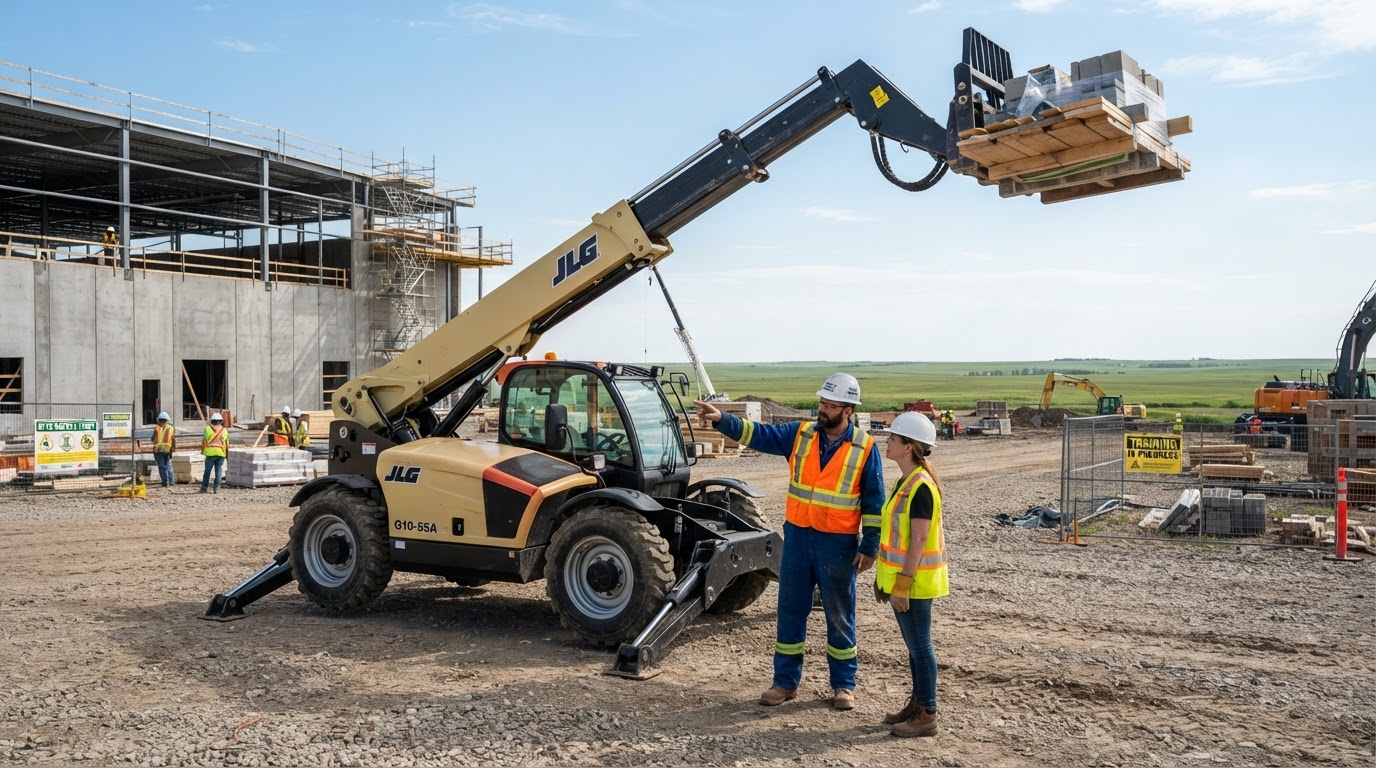
If you are looking for telehandler training in Regina or Saskatchewan, it is important to choose training that combines equipment knowledge with practical, hands-on operation. Telehandlers are extremely useful on construction and industrial worksites, but their extending boom and changing load capacity create operating considerations that differ from a conventional forklift.
Duane Gwilliam Training provides practical telehandler operator training at customer worksites in Regina, throughout Saskatchewan and in other provinces. Training at the worksite allows operators to learn using equipment and conditions that are relevant to the job they perform.
What Does Telehandler Training Cover?
Telehandler operators need to understand how the machine changes as the boom is raised, lowered and extended. Safe operation requires an understanding of the equipment's controls, stability, capacity and limitations.
Our telehandler training covers areas such as pre-use inspections, controls and operating functions, machine stability, capacity and load charts, boom extension and elevation, safe load handling, fork positioning, travelling with loads, slopes and uneven terrain, pedestrian awareness, workplace hazards, and proper parking and shutdown procedures.
Operators also complete hands-on training and a practical evaluation so they can demonstrate their ability to operate the equipment safely.
Why Are Telehandler Load Charts Important?
A telehandler's lifting capacity is not the same in every boom position. Capacity can change as the boom is extended or raised, and operators need to understand how to use the manufacturer's load chart for the specific machine they are operating.
The weight of the load, boom angle, boom extension, attachment and equipment configuration can all affect what the machine is capable of safely handling. Operators should never rely on assumptions or experience with a different telehandler when determining capacity.
Learning how to locate and interpret the information provided for the equipment is an important part of telehandler operator training.
Who Should Take Telehandler Training?
Employees who operate or will be expected to operate a telehandler should receive appropriate operator training. This includes new operators as well as experienced employees who may require refresher or recertification training.
Additional training may also be appropriate when an employee begins using different equipment or attachments, workplace conditions change, unsafe practices are observed, or an incident or near miss occurs.
An operator may have years of experience with other powered mobile equipment and still need telehandler-specific training because of the way the boom, load and machine stability interact.
How Long Does Telehandler Training Take?
The length of training can vary depending on the number of operators, their previous experience, the equipment available and the needs of the workplace. Duane Gwilliam Training can discuss your group and provide course and scheduling details based on your situation.
On-site training can be especially convenient for employers because employees receive instruction and practical evaluation at their own workplace rather than travelling to a separate training facility.
What Certification Do Operators Receive?
Operators who successfully complete the required theory and practical components receive documentation confirming completion of their telehandler operator training.
We can also help employers plan for refresher and recertification needs. If you are unsure what training or certification is appropriate for your employees, contact us to discuss the equipment they operate and the work they perform.
Why Choose On-Site Telehandler Training?
Telehandlers are often used in environments where ground conditions, slopes, pedestrians, structures and other equipment can create additional hazards. Training at the customer's site allows these real workplace considerations to be incorporated into the discussion.
It also allows operators to become familiar with the equipment they use at work and gives employers a practical way to train multiple employees at one location.
Experienced Saskatchewan Equipment Training
Duane Gwilliam Training is a family-owned Saskatchewan safety training company with more than 30 years of combined experience. We have trained more than 18,000 people across five provinces and provide training on many types of construction and powered mobile equipment.
Our focus is practical, easy-to-understand training that operators can apply on the job.
If your business needs telehandler training in Regina, elsewhere in Saskatchewan or at a worksite in another province, contact Duane Gwilliam Training to discuss your training requirements and available dates.