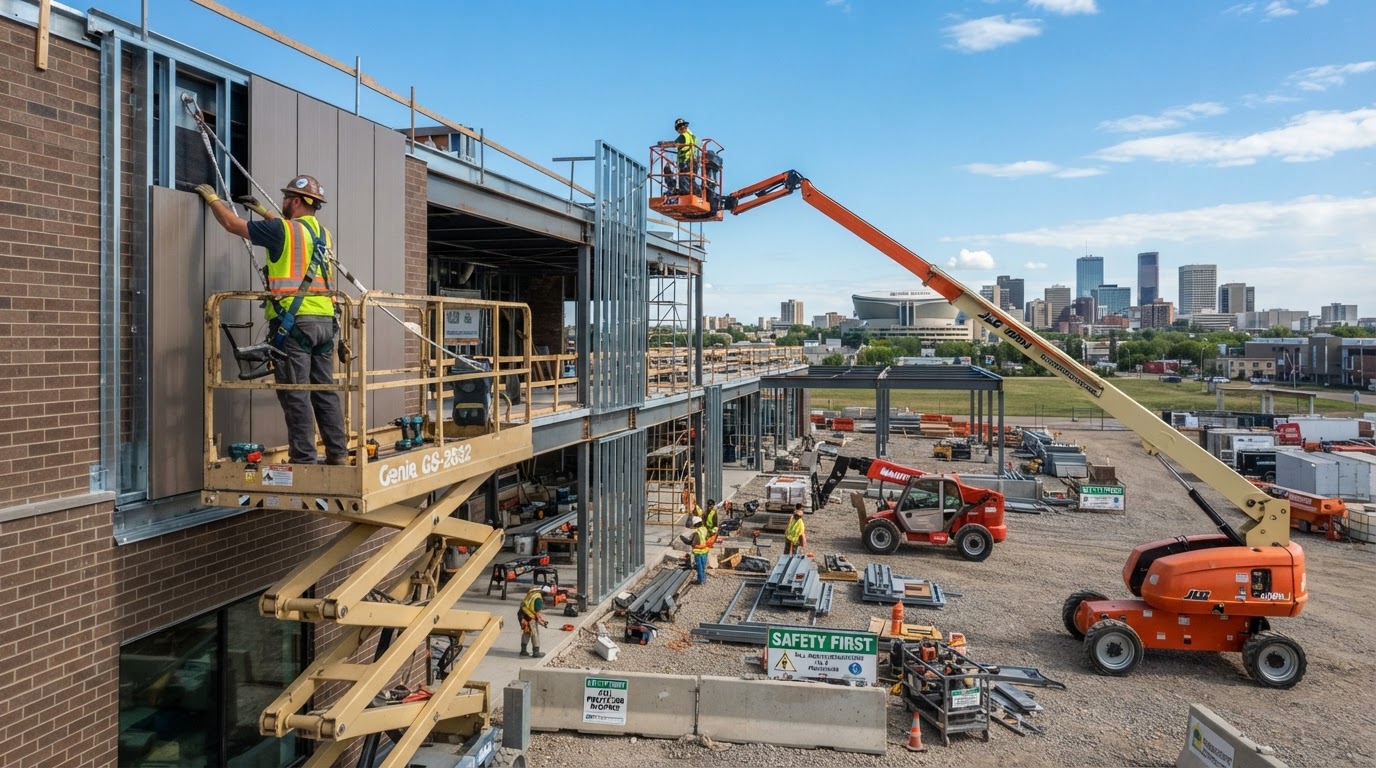
Changing lights, completing building maintenance and reaching overhead work areas can all involve an elevating work platform. Whether the job uses a scissor lift or a boom lift, safe operation involves much more than raising and lowering the platform.
For businesses in Regina and across Saskatchewan, practical training helps operators understand the equipment, recognize hazards and make informed decisions before leaving the ground.
Understand the Equipment Being Used
Scissor lifts and boom lifts have different operating characteristics. Controls, reach, travel restrictions and emergency systems can also vary between models.
Operators need to understand the manufacturer's instructions for the specific machine they will use. Experience on one lift does not replace familiarization with another.
Before beginning work, confirm that the equipment is suitable for the task and operating environment.
Inspect the Lift Before Use
Pre-operation inspections and function checks help identify problems before someone is working at height.
Follow the manufacturer's inspection procedure. Check the condition of the platform, guardrails, access gate, tires, hydraulic components and controls, along with the safety devices fitted to the machine.
Operators should know how to report defects and when equipment must be removed from service. A damaged or malfunctioning lift should never be used simply because the job is expected to take only a few minutes.
Assess the Whole Work Area
A clear space directly beneath the platform is only one part of the assessment.
Look for overhead structures, electrical hazards, doorways, moving vehicles and people entering the work area. Consider whether the operator could become trapped between the platform and an overhead obstruction.
Check that the supporting surface meets the machine's requirements. Outdoor work also requires attention to weather and changing site conditions. Follow the manufacturer's operating limits and stop when conditions are unsafe.
Stay Within the Platform's Limits
The platform's rated capacity must account for the people, tools and materials being carried. Keep the load within the manufacturer's limits and distribution instructions.
Workers should maintain firm footing on the platform floor. Standing on guardrails or placing a ladder inside the platform to gain extra height introduces serious hazards.
Fall protection arrangements must match the equipment, manufacturer's instructions, applicable provincial requirements and workplace procedures.
Plan for an Emergency
Before work begins, operators and designated ground personnel should understand the emergency procedures relevant to the machine and task.
Know how to communicate, where emergency controls are located and how assistance will be provided. Emergency planning should happen while everyone is safely on the ground.
Bring Training to Your Workplace
Duane Gwilliam Training provides on-site aerial work platform training covering equipment knowledge, hazard recognition, inspections, safe operating practices and practical evaluation.
Using workplace equipment helps connect the training to the tasks your employees perform and the conditions they encounter.
Whether your team works in maintenance, construction or an industrial facility, preparation matters before every elevated task.
Visit duanegwilliamtraining.com to arrange scissor lift and boom lift training in Regina or discuss training at your Saskatchewan worksite.