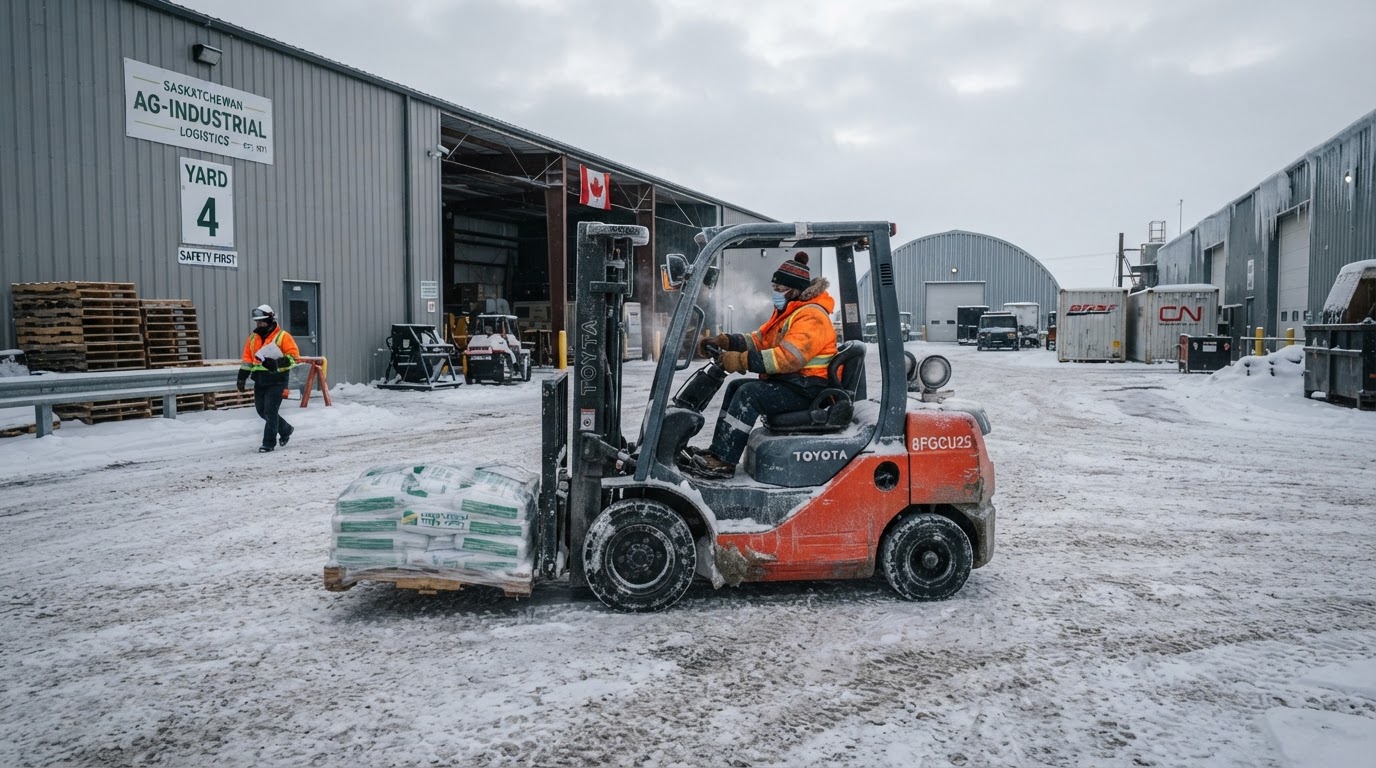
Winter changes the way work gets done in Saskatchewan. Snow, ice, shorter daylight hours and freezing temperatures can create additional hazards for forklift operators, even on routes they travel every day.
For employers in Regina and across Saskatchewan, November is a useful time to review equipment condition, traffic routes and operator practices before winter conditions become routine.
Start with the Forklift and Its Surroundings
A safe shift begins before the first load moves. Operators should complete the visual inspection and operational checks specified for their equipment, following the manufacturer's instructions.
Check tires, forks, hoses, restraints, lights and warning devices. Report defects promptly and remove equipment from service when a defect affects safe operation.
The surrounding area deserves equal attention. An inspection of the forklift does not tell you whether the loading dock, yard or warehouse entrance is safe. Check the planned route for slippery surfaces, obstructions and areas where pedestrians may enter.
Address Snow and Ice Before Moving Loads
Slippery surfaces can affect traction, steering and stopping. Clear and treat travel routes using the workplace's winter maintenance procedures, and reassess them as conditions change.
Pay particular attention to transitions between outdoor yards and indoor floors. Snow carried inside can melt and leave wet surfaces near doors and loading areas.
Operators should adjust their speed to the conditions and avoid sudden braking, acceleration or steering. If a route cannot be used safely, stop and report the problem so it can be addressed.
Keep Visibility and Pedestrian Separation a Priority
Winter clothing, poor lighting and snow accumulation can make it harder for operators and pedestrians to see one another.
Keep windows, mirrors and lights clean. Review blind corners, doorways and pedestrian crossings. Make sure stored materials and snow piles do not obstruct sight lines.
Pedestrians need clear, maintained walking routes. Operators and workers on foot should understand the site's traffic procedures and communication methods before work begins.
Follow the Manufacturer's Cold-Weather Instructions
Cold temperatures can affect batteries, controls and other equipment components. Follow the instructions for starting, warming up, operating and maintaining the specific forklift.
Do not assume that a machine is suitable for outdoor winter work simply because it can travel outside. Equipment selection must suit the surface, environment and task.
Workers also need suitable clothing that allows them to use controls safely, along with appropriate protection from cold exposure.
Use the Season Change as a Training Opportunity
A winter safety discussion can connect classroom knowledge with the conditions operators actually face.
Ask your team: What changes at our loading area after snowfall? Where does melted snow collect? When should an operator stop and request help?
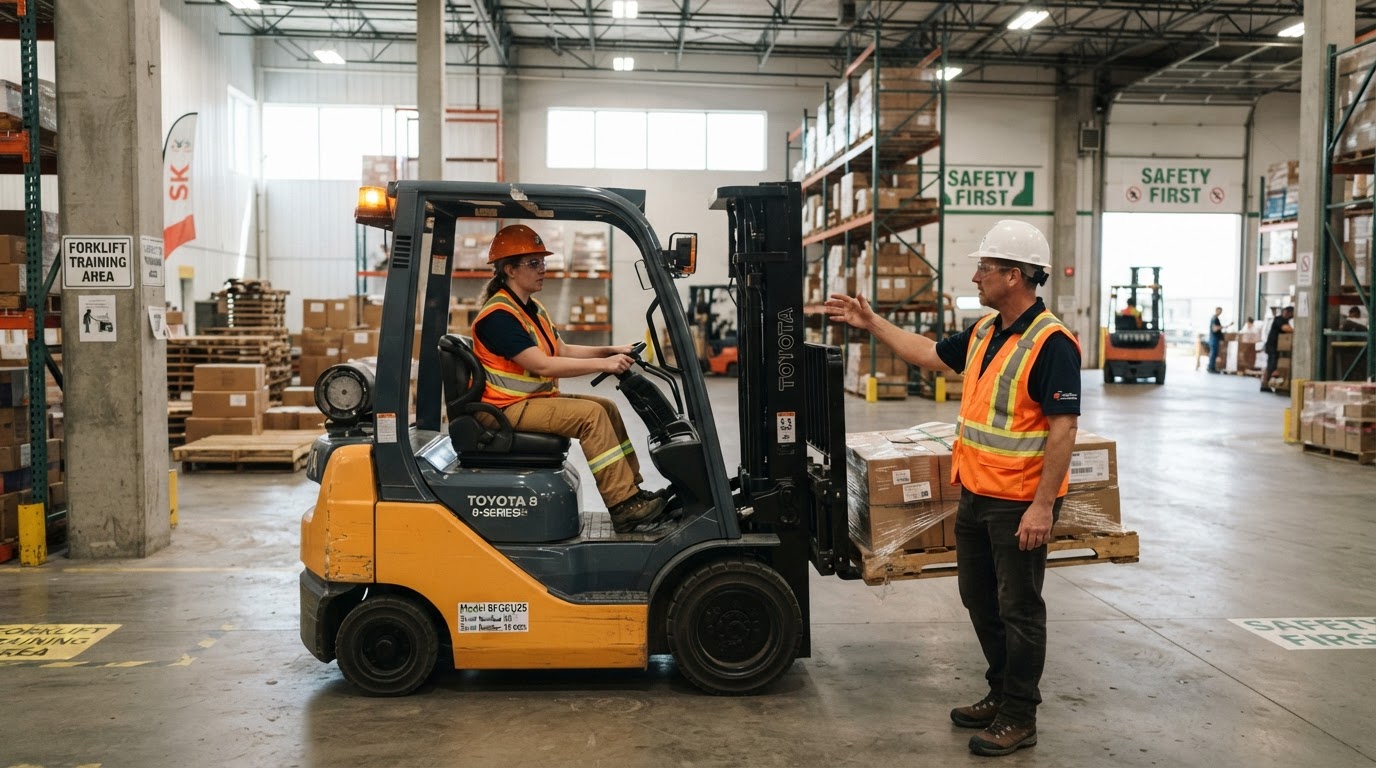
Duane Gwilliam Training provides on-site forklift training with classroom instruction and practical evaluation. Training at your workplace allows your team to discuss the equipment and hazards relevant to their work.
To arrange forklift training in Regina or elsewhere in Saskatchewan, visit duanegwilliamtraining.com and contact Duane Gwilliam Training.